
They Didn’t Forget Us .. They Went Somewhere Else
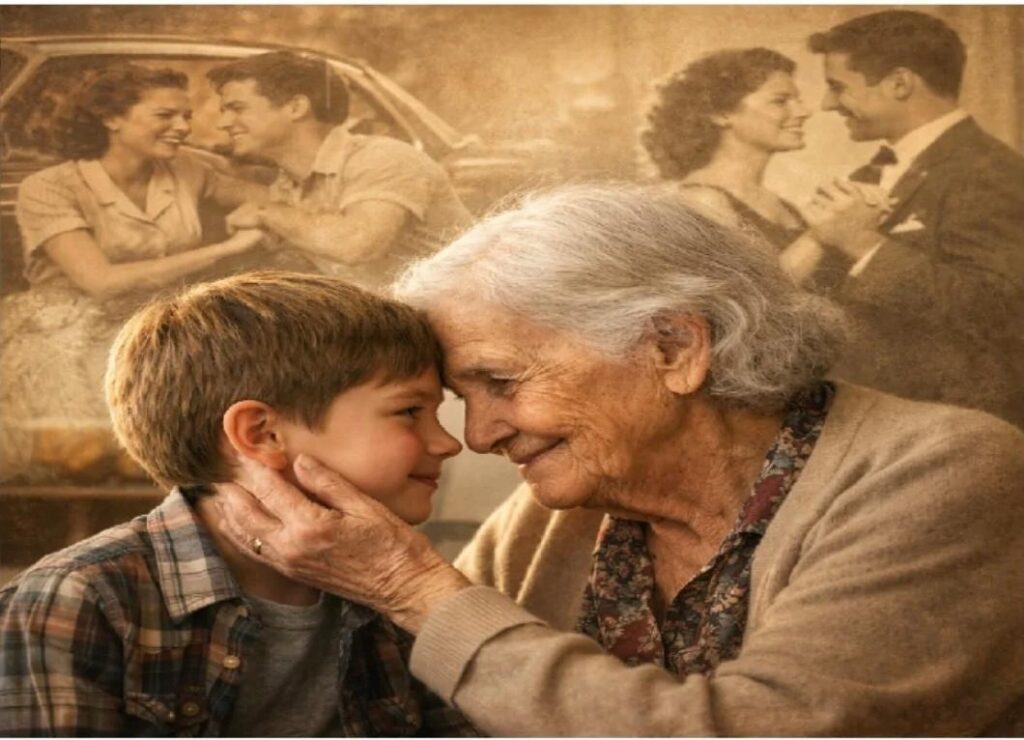
Alzheimer’s and the Quiet Art of Time Travel
The first time my grandmother asked me where her mother was,
I hesitated.
Her mother had been dead for decades.
But in that moment, she wasn’t dead.
She was simply late.
My grandmother wasn’t confused. She was certain. Calm. Almost relieved to be waiting for someone she loved.
That was the moment I understood something no medical article had prepared me for:
Alzheimer’s doesn’t always take people away from us.
Sometimes, it sends them somewhere else.
Memory Does Not Disappear It Chooses
We often describe Alzheimer’s as memory loss, but that description is incomplete.
What actually happens is more selective, more intentional almost strategic.
The brain does not erase memories randomly.
It lets go of what is demanding: the present.
Names, dates, appointments, rules, updates.
What remains are memories tied to identity and emotion: Childhood. Early love. Moments of safety. Years when the self felt whole.
In neurological terms, recent memories rely on fragile neural pathways, while older, emotionally charged memories are deeply rooted. When the disease advances, the brain retreats to what is strongest.
In human terms:
The mind goes home.
Living in the Wrong Time or the Right One?
Many Alzheimer’s patients wake up believing they are young again.
They speak as if their lives are just beginning. They search for parents who once guided them. They recognize feelings before faces.
To the outside world, this is disorientation.
To them, it is coherence.
The present is loud, fast, and unfamiliar.
The past is quiet, structured, and known.
So they stay there.
And we children, caregivers, grandchildren are the ones who feel lost.
Grandchildren Understand What Adults Forget
There is something almost sacred about the way children interact with Alzheimer’s patients.
Children do not argue with memory. They do not insist on facts. They do not correct timelines.
If a grandmother believes her grandson is her younger brother, the child does not panic.
He adapts.
He plays the role. He listens. He stays.
In doing so, he becomes a visitor in another era a time traveler without fear.
Adults, on the other hand, struggle. We are attached to accuracy. To correction. To reality as we define it.
But Alzheimer’s teaches a painful lesson: Connection does not require shared time.
It requires shared emotion.
Who Are We Without the Present?
Modern identity depends heavily on the present: Who we work for. What we manage. What we owe. What we must remember.
Alzheimer’s strips that away.
And what remains is often raw, unfiltered humanity: Fear without explanation. Love without conditions. Joy without context. Sadness without shame.
Patients cry more easily. Laugh more freely. Speak truths they once buried under social rules.
The disease is cruel but it is also revealing.
It exposes how much of our personality is performance, and how little of it is essence.
Time Is a Mental Agreement
We treat time as if it were solid and objective.
Alzheimer’s breaks that illusion.
Time is a mental construction maintained by memory.
When memory loosens its grip, time bends.
For someone with Alzheimer’s, childhood can be closer than yesterday. A long-dead spouse can feel more present than the person standing in front of them.
This is not madness. It is the brain reorganizing itself around meaning.
In that sense, Alzheimer’s is not only a disease of forgetting. It is a disease of remembering differently.
Learning to Visit Instead of Correct
One of the hardest lessons for families is knowing when to stop correcting.
Correcting facts often increases anxiety. Correcting timelines creates shame. Correcting reality creates distance.
Visiting, on the other hand, creates peace.
Sometimes love means letting go of the present. Sometimes care means stepping into a memory that isn’t yours. Sometimes the kindest thing you can do is ask questions about a world that no longer exists except for one person.
A Different Way to See Alzheimer’s
Alzheimer’s is devastating.
It exhausts families.
It breaks routines.
It reshapes lives.
But it is not empty.
Inside the confusion, there is still a self. Inside the regression, there is still meaning. Inside the loss of time, there is often a return to what once felt safest.
Perhaps Alzheimer’s is not just about losing memory.
Perhaps it is about the mind choosing where it wants to stay when the present becomes unbearable.
And maybe just maybe the real tragedy is not that they forget where they are,
but that we struggle to meet them where they’ve gone.